 Whatsapp
Emerging Modes of Business: E-Business, Outsourcing, and the Modern Economy Explained
A clear Class 11 Business Studies guide to e-business, e-commerce, outsourcing, BPO, KPO, and how modern business actually works.
- 11th
- Study Advice
- BST
Emerging Modes of Business is one of those Class 11 Business Studies chapters that feels very close to real life.
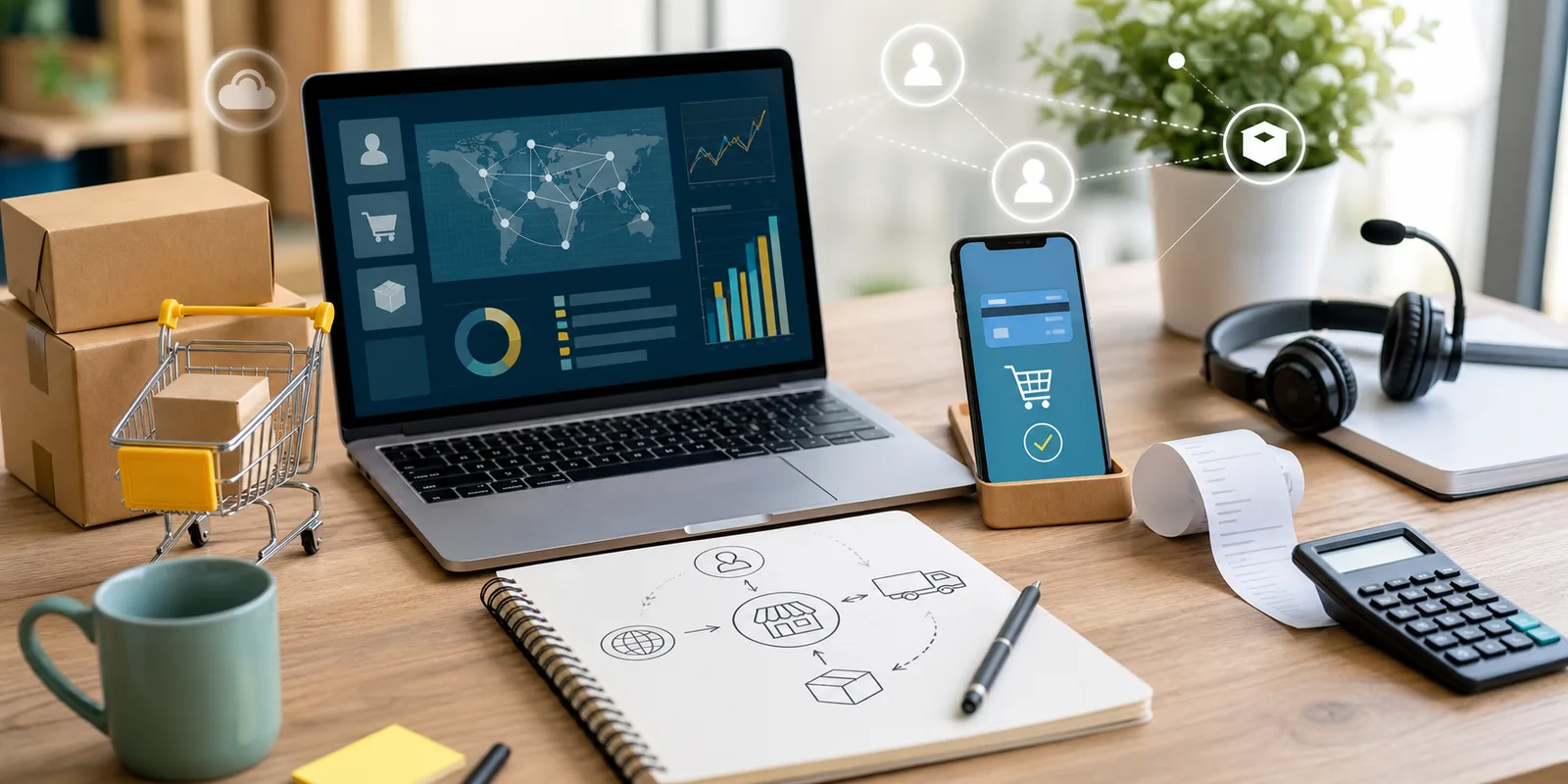
You may not use the word “e-business” every day, but you already see it everywhere. You order food through an app. A shop accepts online payment. A small business sells through social media. A company answers customer questions through a support centre. A student buys a course online. A seller tracks orders, stock, payments, and delivery on a laptop.
That is why this chapter should not be studied like a list of new terms. It is a chapter about how business has changed.
Earlier, many business activities depended mainly on physical shops, paper records, face-to-face meetings, local markets, and manual coordination. Today, a large part of business can happen through computers, phones, networks, software, digital payments, courier systems, online platforms, and specialised service providers.
Once you understand this idea, e-business and outsourcing become much easier.
What Does Emerging Modes of Business Mean?
The word “emerging” means developing, growing, or becoming more important.
In Business Studies, emerging modes of business refers to newer methods that businesses use to operate in a changing world. These methods usually depend on technology, networks, specialisation, and faster communication.
Two important parts of this chapter are:
- e-business
- outsourcing
E-business is about using electronic networks to conduct business activities. Outsourcing is about getting certain business activities done by outside specialists instead of doing everything inside the business.
Both are connected with modern business because companies today want speed, flexibility, wider reach, better service, and lower cost. A business may use online selling to reach customers in many cities. It may outsource customer support to a service provider. It may use digital payment systems, cloud-based records, courier tracking, and online marketing.
The main point is simple: business is no longer limited to one office, one counter, one market, or one manual system.
E-Business Is Bigger Than Online Shopping
Many students think e-business means buying things online.
That is only one part.
E-business means carrying out business activities through electronic networks. It includes buying, selling, payment, communication, customer service, inventory management, order tracking, internal coordination, online promotion, supplier contact, and many other activities.
E-commerce is narrower. It mainly refers to buying and selling goods and services through the internet. E-business is wider because it includes e-commerce as well as many other digital business processes.
Think of an online clothing store. The customer sees products and places an order. That is e-commerce. But the business also checks stock, sends order details to the warehouse, updates payment records, shares delivery information with the courier partner, handles returns, replies to customer questions, and studies which products are selling well. These activities are part of the larger e-business system.
This is why students should avoid writing that e-business only means online shopping. It is much broader.
Why Businesses Use E-Business
Businesses use e-business because it solves many practical problems.
First, it increases reach. A small seller is not limited only to people who pass by the shop. With online platforms, social media, and delivery partners, the seller can reach customers in other areas too.
Second, it saves time. Orders, payments, invoices, confirmations, and customer messages can move quickly through digital systems.
Third, it improves record keeping. A business can track stock, sales, customer orders, expenses, and payments more easily when the system is organised.
Fourth, it improves convenience for customers. Customers can compare products, check prices, read details, pay online, and track delivery without visiting a store.
Fifth, it helps businesses respond faster. If a product is selling quickly, the business can notice it. If customers are complaining about delivery delays, the business can track the issue.
This makes the chapter easier to remember and easier to explain in exams.
Main Types of E-Business Transactions
E-business transactions can be understood by looking at who is dealing with whom.
B2B: Business to Business
B2B means business-to-business transactions.
This happens when one business deals with another business. For example, a garment manufacturer buying cloth from a textile supplier, a restaurant ordering packaging material from a wholesaler, or a school buying software from an education technology company.
B2B is very important because businesses rarely work alone. They depend on suppliers, distributors, service providers, transporters, banks, software companies, and many other organisations.
In e-business, B2B may happen through online ordering systems, shared inventory data, digital invoices, online payments, supplier portals, and automated purchase records.
B2C: Business to Consumer
B2C means business-to-consumer transactions.
This is the type students usually recognise first. A customer buys a product or service from a business through a website, app, or online platform. Ordering books, clothes, groceries, food, online classes, tickets, or digital subscriptions are common examples.
In B2C, the business must focus strongly on customer experience. Product details should be clear. Payment should be simple. Delivery should be reliable. Return and support policies should be easy to understand.
The same product can be part of different transaction types depending on who is buying and who is selling.
C2C: Consumer to Consumer
C2C means consumer-to-consumer transactions.
This happens when one consumer sells directly to another consumer, usually through an online platform. For example, a person selling a used phone, old books, furniture, or a bicycle to another person through a marketplace.
The platform may provide listing, search, chat, payment support, or rating systems. But the transaction is mainly between two consumers.
C2C shows how technology can create a market even when the seller is not a traditional business.
Intra-B: Within the Business
Intra-B means transactions or communication within the business.
This includes internal activities such as communication between departments, employee records, stock updates, online training, internal approvals, work schedules, accounting records, and coordination between branches.
Students sometimes ignore this part because it does not look like buying and selling. But it is very important.
A company may have sales, accounts, purchase, warehouse, customer support, and management teams in different places. E-business helps these teams share information and work together.
If internal systems are weak, even a good online store can fail because orders, stock, payment, and delivery will not match properly.
Benefits of E-Business for Students to Remember
The benefits of e-business become simple when you group them properly.
For the business, e-business can provide:
- wider market reach
- lower need for some physical infrastructure
- faster communication
- better customer interaction
- quicker order processing
- easier data storage and analysis
- flexibility in operations
For the customer, e-business can provide:
- convenience
- more choice
- easier comparison
- doorstep delivery
- faster payment options
- order tracking
- access to services beyond local markets
For the economy, e-business can support:
- new business models
- small sellers reaching wider markets
- digital services
- logistics growth
- online education and training
- new jobs in technology, delivery, support, design, marketing, and data work
Do not memorise these as three separate lists only. Understand the direction. E-business reduces distance between buyers and sellers, makes information move faster, and allows work to happen through connected systems.
Limitations and Risks of E-Business
E-business is useful, but it is not perfect.
Students should study the limitations honestly because modern business needs both opportunity and caution.
One limitation is the need for technology access. Not every customer, seller, or employee may have strong internet, digital skills, or suitable devices.
Another limitation is trust. Customers may worry about product quality, payment safety, delivery reliability, return problems, or fake sellers.
There are also security risks. Businesses must protect customer information, payment details, passwords, and internal records.
Some products and services still need physical inspection or personal explanation. A customer may want to try clothes, inspect furniture, visit a doctor, or meet a teacher before deciding.
Delivery is another challenge. Even if the website works well, the customer experience can suffer if packaging, transport, return pickup, or after-sales service is poor.
This is a mature way to write about the chapter. Technology helps business, but it does not replace good business sense.
What Is Outsourcing?
Outsourcing means getting certain business activities done by an outside agency or specialist instead of doing them within the organisation.
A business cannot always do everything by itself. It may be good at teaching, manufacturing, selling, designing, or consulting, but it may not want to handle every support activity internally.
For example, a company may outsource:
- customer support
- payroll processing
- website maintenance
- delivery and logistics
- security services
- housekeeping
- data entry
- accounting support
- recruitment assistance
- call centre work
Outsourcing is based on a simple idea: let specialists handle specialised or routine tasks so the business can focus on its main work.
This does not mean the outsourced work is unimportant. It means another organisation may be able to do that work more efficiently because it has the right people, systems, and experience.
Why Businesses Outsource Work
Businesses outsource work for several reasons.
The first reason is focus. A business wants to spend more attention on its core activity. If a company is excellent at designing products, it may outsource transport, payroll, or customer support.
The second reason is cost. Hiring full-time employees, buying equipment, training staff, and managing systems can be expensive. Outsourcing may reduce cost when an outside provider can handle the work at scale.
The third reason is expertise. A specialist agency may have better tools, better training, and more experience in that area.
The fourth reason is flexibility. During busy periods, a business may need more support. During slow periods, it may need less. Outsourcing can make it easier to adjust.
The fifth reason is speed. An experienced service provider may set up a process faster than a business building it from zero.
Outsourcing is not only about saving money. It is also about using outside capability wisely.
BPO and KPO in Simple Words
Two common terms connected with outsourcing are BPO and KPO.
BPO means Business Process Outsourcing.
It usually involves routine or process-based business activities such as customer support, data entry, billing support, payroll processing, call centre services, and back-office work.
KPO means Knowledge Process Outsourcing.
It involves work that needs deeper knowledge, analysis, judgement, or specialised skill. Examples may include research support, financial analysis, legal process support, market research, data analysis, content research, and technical consulting support.
The difference is not that one is good and the other is bad. The difference is the nature of the work.
BPO is more process-driven. KPO is more knowledge-driven.
This simple distinction helps students avoid mixing the two terms.
Outsourcing Also Has Risks
Outsourcing can help a business, but it must be managed carefully.
One risk is loss of control. When work is handled outside the organisation, the business must depend on another party’s quality, timing, and discipline.
Another risk is confidentiality. The outside agency may handle customer data, financial details, employee records, or business information. The company must protect this information.
Quality can also become a concern. If the service provider does not understand the business properly, customer experience may suffer.
There can be overdependence too. If a business relies too much on one service provider, it may face problems if that provider fails, raises prices, or stops service.
Employees may also feel insecure if they think work is being shifted outside only to reduce internal jobs.
So outsourcing should not be treated as a shortcut. It is a business decision that needs clear expectations, trust, monitoring, and responsibility.
How E-Business and Outsourcing Work Together
In real life, e-business and outsourcing often work together.
Imagine a small online store.
The owner may sell products through a website or social media page. Payments may happen online. A courier company may deliver the products. A freelance designer may create product posts. A customer support service may answer order questions. An accountant may handle tax and billing support. A software platform may manage stock and orders.
The customer sees one online store, but many systems and service providers may be working behind it.
This is the modern economy.
Businesses are becoming more connected. They do not always own every resource or perform every activity inside one building. They use networks, platforms, specialised partners, digital records, online payments, and service providers.
This is why the chapter is important. It helps students understand the business world they already live in.
How to Study This Chapter for Exams
Start by making clear definitions.
Write one simple meaning each for e-business, e-commerce, B2B, B2C, C2C, intra-B, outsourcing, BPO, and KPO. Do not copy very long paragraphs in the first round. First make sure you can explain each term in your own words.
Then create comparison pairs:
- e-business and e-commerce
- B2B and B2C
- BPO and KPO
- internal work and outsourced work
- benefits and limitations of e-business
- benefits and risks of outsourcing
After that, attach examples.
Examples make this chapter much easier. Use examples from online shopping, school apps, payment systems, courier delivery, call centres, business software, customer support, and supplier coordination.
Finally, practise short answer writing. This chapter can produce definition-based, difference-based, example-based, and application-based questions.
Do not only memorise technology words. Understand what problem each mode solves for business.
A Simple Way to Remember the Whole Chapter
Use this flow:
Business needs to reach customers, coordinate work, reduce cost, and improve service.
E-business helps through digital networks.
E-commerce handles online buying and selling.
Outsourcing helps through outside specialists.
Together, they make modern business faster, wider, and more flexible.
If you remember this flow, the chapter becomes connected.
E-business answers the question: how can business use digital networks?
Outsourcing answers the question: which work can outside specialists do better or more efficiently?
The modern economy uses both.
Frequently Asked Questions
What is the difference between e-business and e-commerce?
E-commerce mainly means buying and selling goods or services online. E-business is wider. It includes e-commerce plus online payments, customer service, supplier coordination, internal communication, inventory records, order tracking, and other digital business activities.
Is online shopping the same as e-business?
No. Online shopping is one example of e-commerce, which is a part of e-business. E-business includes many activities beyond shopping, such as digital records, customer support, supplier systems, and internal business communication.
What are the main types of e-business transactions?
The main types are B2B, B2C, C2C, and intra-B. B2B is between businesses. B2C is between a business and a consumer. C2C is between consumers. Intra-B happens within the business.
Why do businesses outsource work?
Businesses outsource work to focus on their main activity, reduce cost, use specialist skills, increase flexibility, and improve efficiency. For example, a business may outsource delivery, customer support, payroll, or website maintenance.
What is the difference between BPO and KPO?
BPO means Business Process Outsourcing and usually covers routine process-based work like customer support, data entry, billing, or payroll support. KPO means Knowledge Process Outsourcing and covers work that needs deeper knowledge, research, analysis, or specialised skill.
Is outsourcing always good for a business?
No. Outsourcing can be useful, but it also has risks. The business may lose some control, face quality issues, depend too much on one provider, or expose confidential information if proper care is not taken.
How should a Class 11 student study this chapter?
Start with simple meanings, then learn examples. Compare e-business with e-commerce, B2B with B2C, and BPO with KPO. Make a table with three columns: term, meaning, and example. This makes the chapter much easier to revise.
Looking for commerce tuitions?
Prachi is a gold-medalist commerce teacher with experience at Deloitte and KPMG. She focuses on fundamentals to build a strong foundation.