
 Whatsapp
How to Practise Accountancy Numericals in Class 11
A practical guide for Class 11 students who want to improve Accountancy accuracy, confidence, and speed through better numerical practice.
- 11th
- Study Advice
- Accounts
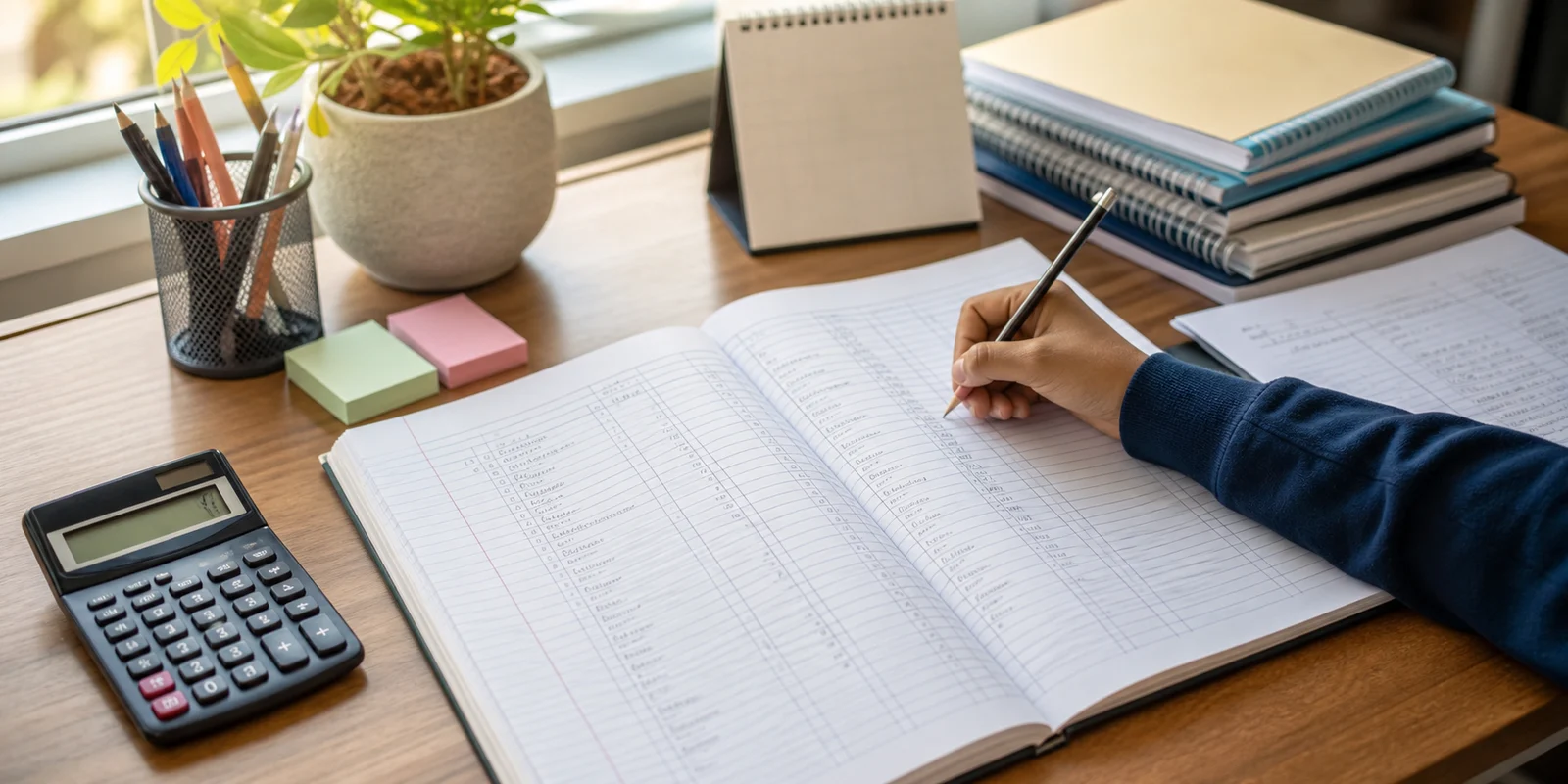
Class 11 Accountancy feels different from most subjects because understanding is not enough by itself.
You may understand what a transaction means. You may know the rule of debit and credit. You may even follow the example in class. But when a fresh numerical question comes in front of you, the real test begins.
Which accounts are affected? Which side should be debited? Which format should you use? Should the amount go in the journal, ledger, cash book, trial balance, or final accounts? Why is the trial balance not matching?
This is why Accountancy needs practice. Not random practice, and not blind copying from the solution. It needs a method.
The good news is that Class 11 is the best time to build this habit. If you learn to practise properly now, journal entries, ledgers, cash books, depreciation, trial balance, rectification, and financial statements become much less frightening later.
First, Stop Measuring Practice by Number of Questions
Many students say, “I solved twenty questions today.”
That sounds impressive, but it does not always mean they improved. If all twenty were copied from examples, checked casually, or solved with the same mistake repeated again and again, the number is not very useful.
In Accountancy, the better question is:
- Did I understand why the entry was written this way?
- Did I identify the accounts correctly?
- Did I choose the right format without looking?
- Did I make fewer careless mistakes than last time?
- Did I check the answer properly?
One well-solved question can teach more than five rushed ones.
Class 11 Accountancy has many connected steps. Source documents lead to vouchers. Vouchers lead to journal entries. Journal entries move into ledgers. Ledgers help prepare the trial balance. The trial balance supports final accounts. If one early step is weak, the later chapter becomes heavier.
So your practice should build the chain, not just finish the page.
Use a Fixed Five-Step Method for Every Numerical
Do not start solving the moment you see the question.
Use this five-step method:
| Step | What to do | Why it helps |
|---|---|---|
| 1 | Read the full question once | You avoid missing dates, discounts, GST, or special instructions |
| 2 | Identify the topic | You know whether it needs a journal, ledger, cash book, BRS, depreciation, or final account |
| 3 | Mark the key details | You keep amounts, account names, and adjustments visible |
| 4 | Solve with working notes | You reduce mental calculation errors |
| 5 | Check the answer | You catch mistakes before they become habits |
This may feel slow at first, but it saves time later. Most Accountancy mistakes happen because students skip the first three steps and begin writing too early.
Practise Journal Entries by Thinking Before Writing
Journal entries are the foundation of Accountancy numericals.
If journal entries are weak, ledger posting becomes confusing. If ledgers are weak, trial balance becomes stressful. If trial balance is weak, final accounts feel like a maze.
For every transaction, ask four questions:
| Question | Example |
|---|---|
| What happened? | Goods were bought for cash |
| Which accounts are affected? | Purchases Account and Cash Account |
| What type of account is each one? | Purchases is nominal, Cash is real |
| What is the debit and credit rule? | Debit expense, credit what goes out |
Then write the entry.
Do not jump directly to “Purchases Dr.” because you have seen it before. That may work for simple questions, but it becomes risky when transactions include credit purchases, returns, trade discount, cash discount, GST, or freight.
At the start, write the logic beside the entry in rough work. Later, as your understanding improves, you will need less rough explanation.
Do Not Avoid Formats
Some students understand the concept but lose marks because the format is untidy or incomplete.
Formats matter in Accountancy because they organise the answer.
Practise formats separately for:
- Journal entries
- Ledger accounts
- Cash book
- Petty cash book
- Bank reconciliation statement
- Depreciation accounts
- Trial balance
- Trading account
- Profit and loss account
- Balance sheet
You do not need to decorate formats. You need to make them clear, balanced, and consistent.
For ledger accounts, practise writing the date, particulars, journal folio if required, and amount columns. For final accounts, practise placing items correctly. For cash book, practise the debit and credit sides carefully. For BRS, practise whether an item should be added or subtracted.
If you struggle with a chapter, sometimes the problem is not the concept. It is that the format is not familiar enough.
Solve One Example, Then Close the Book and Repeat It
Here is a simple but powerful practice habit.
When you learn a new type of question, first solve one example with help. Understand each step. Ask doubts if needed. Then close the book and solve the same question again on a fresh page.
This second attempt is important.
It shows whether you actually understood the method or only followed the printed solution.
Use this pattern:
| Attempt | How to solve |
|---|---|
| First attempt | Solve with explanation and full attention |
| Second attempt | Solve the same question without looking |
| Third attempt | Solve a similar question from homework or exercise |
Do not feel that repeating the same question is a waste of time. Repetition is useful when it makes the method clearer.
This is especially useful in chapters like depreciation, trial balance, rectification of errors, and financial statements, where one method appears in many different forms.
Keep Your Rough Work Neat Enough to Check
Rough work is not supposed to be perfect, but it should be readable.
In Accountancy, rough work helps you think. It is where you can list accounts, calculate depreciation, compare cash book and pass book items, identify adjustments, or check totals.
Poor rough work creates two problems.
First, you cannot find your own mistake. Second, you may copy the wrong amount into the final answer.
Use rough work for:
- Account names before journal entries
- Depreciation calculations
- Discount calculations
- GST calculations where applicable
- Ledger totals
- Difference in trial balance
- BRS additions and deductions
- Final accounts adjustments
Keep the rough work close to the final answer, not scattered across the page.
When you check your answer, your rough work should help you trace the path from question to final amount.
Practise From Easy to Mixed Questions
Do not begin every chapter with the hardest question.
Start with direct questions so the basic method becomes clear. Then move to questions with small variations. After that, solve mixed questions where you have to identify the method yourself.
This order works well:
| Stage | Type of practice |
|---|---|
| Stage 1 | Direct examples from class |
| Stage 2 | Textbook exercise questions of the same type |
| Stage 3 | Questions with one extra adjustment |
| Stage 4 | Mixed questions without chapter hints |
| Stage 5 | Timed practice after accuracy improves |
Many students reverse this order. They jump into difficult mixed questions, get stuck, feel weak, and then avoid the chapter.
Build confidence step by step.
Speed should come after clarity. If you use a timer too early, you may only practise panic.
Make an Error Log After Checking
Checking an answer is not the end of practice.
The most important step comes after checking: write down the mistake.
Use a simple error log:
| Chapter | Mistake I made | What I will check next time |
|---|---|---|
| Journal | Treated credit purchase as cash purchase | Check whether payment happened immediately |
| Ledger | Posted amount on the wrong side | Match debit and credit from the journal first |
| Cash Book | Forgot discount column | Check if discount is mentioned in the transaction |
| BRS | Added an item that should be subtracted | Decide from the starting balance first |
| Final Accounts | Recorded only one effect of adjustment | Write both effects in rough work |
This table is more useful than writing “revise Accountancy” in your planner.
It tells you exactly what to fix.
The aim is not to feel bad about mistakes. The aim is to stop repeating them.
Practise Checking, Not Just Solving
Many students check only the final answer. In Accountancy, that is not enough.
You must learn to check the process.
For journal entries, check whether every debit has a matching credit.
For ledger accounts, check whether posting has been done on the correct side.
For cash book, check totals and balances carefully.
For BRS, check whether you started with cash book balance or pass book balance.
For depreciation, check the date, rate, method, and remaining book value.
For trial balance, check if all balances have been copied correctly.
For final accounts, check both effects of every adjustment.
This checking habit makes you independent. You stop depending on someone else to point out every mistake.
Use a Weekly Practice Rhythm
Accountancy becomes difficult when students leave it for long gaps.
A better method is small, regular practice.
Try this weekly rhythm:
| Day | Practice focus |
|---|---|
| Monday | Revise the class concept and solve two direct questions |
| Tuesday | Practise journal or format work for 20 minutes |
| Wednesday | Solve three exercise questions slowly |
| Thursday | Correct mistakes and update the error log |
| Friday | Solve one mixed or slightly harder question |
| Saturday | Redo one old question without looking |
| Sunday | Light revision of formulas, formats, and doubts |
You can adjust the days based on your school and tuition schedule. The point is not to make a perfect timetable. The point is to touch Accountancy often enough that it stays familiar.
Even 25 to 30 focused minutes can help if you solve honestly and check properly.
Know When to Ask for Help
Asking for help is not a weakness.
But you should ask clearly.
Instead of saying, “I do not understand Accountancy,” say:
- I cannot identify the two accounts in transactions.
- I get confused between debit and credit.
- I understand journal entries but cannot post to ledger.
- I lose marks in BRS because I do not know whether to add or subtract.
- I can solve final accounts, but adjustments confuse me.
- My trial balance does not match and I cannot find the error.
Specific doubts get better answers.
Do not wait until the whole chapter feels impossible. In Class 11 Accountancy, small doubts can become big gaps if they remain hidden for many weeks.
A Simple Practice Rule to Follow
If you want one rule, follow this:
Practise fewer questions, but practise them completely.
That means:
- read the question properly
- identify the accounts or format
- write working notes
- solve neatly
- check the process
- mark the mistake
- redo selected questions later
This is how Accountancy starts becoming manageable.
You will not become perfect in one week, and you do not need to. What matters is that your practice should make you a little clearer each time.
In Class 11, the student who improves steadily often does better than the student who only studies in panic before the test.
Frequently Asked Questions
How many Accountancy numericals should I practise every day in Class 11?
Quality matters more than a fixed number. On regular days, two to four well-checked questions can be enough if you understand the method and correct your mistakes. Before tests, you may need more, but do not rush so much that you stop learning from errors.
Should I copy solved examples before trying questions myself?
You can use solved examples to understand a new method, but do not stop there. After reading the example, close the book and solve it again on your own. Then try a similar question without help.
What should I do if my trial balance does not match?
Do not panic. Check posting, totals, account balances, and whether any amount has been copied on the wrong side. Also look for common errors such as missing entries, wrong totals, or writing a debit balance as credit.
Is it better to practise with a timer?
Use a timer only after the method is clear. If you are still learning a topic, slow practice is better. Once your accuracy improves, timed practice can help you build exam speed.
How can I reduce silly mistakes in Accountancy?
Most silly mistakes reduce when you slow down at the start, keep rough work readable, write working notes, and check both sides of an entry or adjustment. An error log also helps because it reminds you of mistakes you personally repeat.
Why do I understand Accountancy in class but forget it at home?
In class, the teacher guides the steps. At home, you have to recall the method yourself. This is why you should redo examples without looking and practise similar questions soon after the lesson.
Looking for commerce tuitions?
Prachi is a gold-medalist commerce teacher with experience at Deloitte and KPMG. She focuses on fundamentals to build a strong foundation.