
 Whatsapp
How to Solve Accountancy Questions Slowly So You Get Faster
A practical Accountancy guide for students who want to reduce mistakes, improve presentation, and build real solving speed.
- 12th
- Study Advice
- Accounts
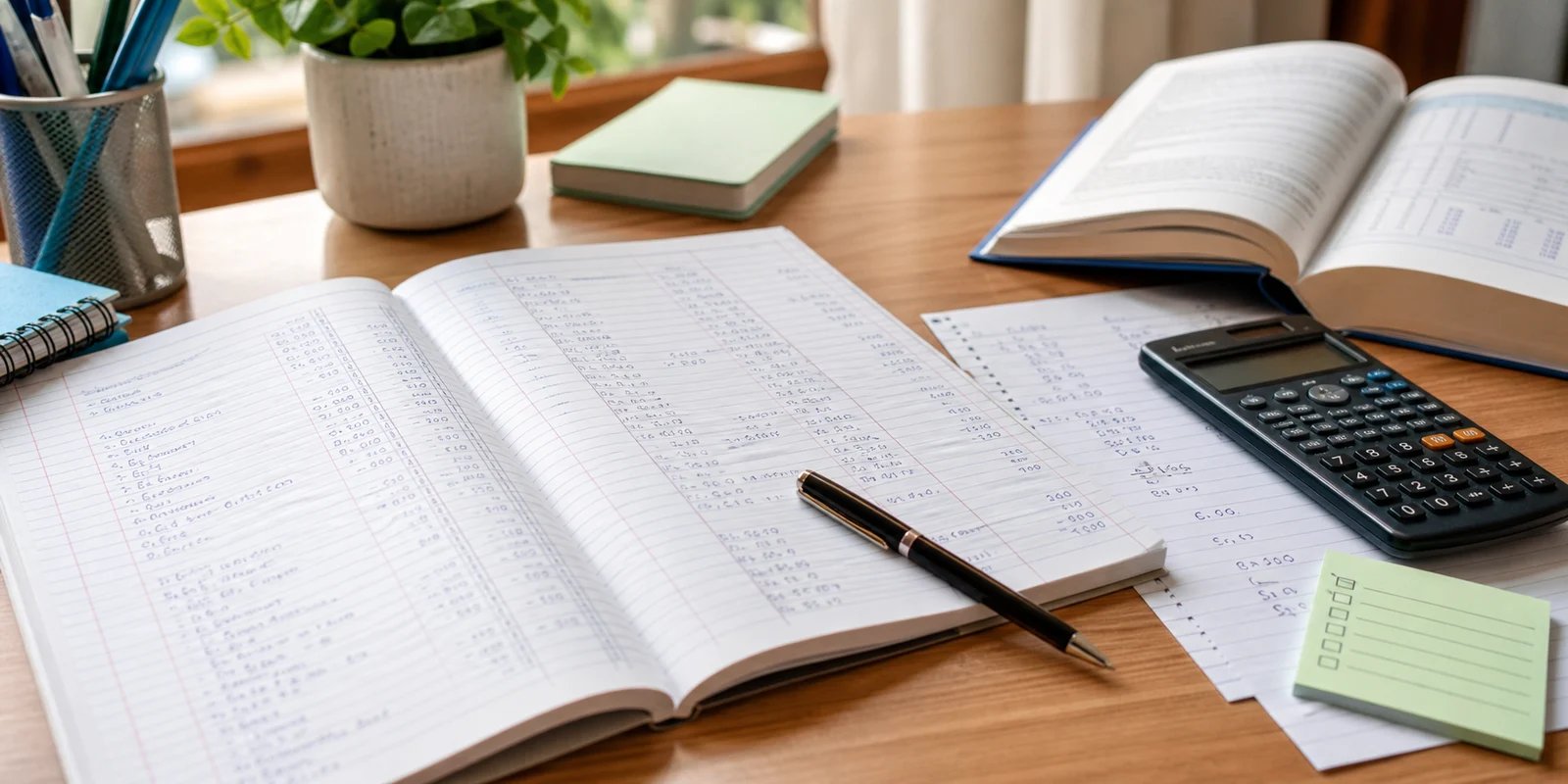
Many students think speed in Accountancy comes from solving more questions quickly.
That sounds sensible, but it often creates the opposite result. The student reads too fast, skips the working note, writes the format in a hurry, misses one adjustment, and then spends ten minutes searching for a mistake.
In Accountancy, speed is not built by rushing. Speed is built by making the right steps automatic.
At first, this means solving slowly. Not lazily. Not carelessly. Slowly in a trained way.
When you slow down at the correct points, you understand the question better. You choose the format with more confidence. You avoid repeating the same mistake. After enough practice, those careful steps become faster on their own.
This is especially important in Class 12 Accountancy, where questions can be long, connected, and full of small details. A student who solves with a method will usually become faster than a student who simply tries to write faster.
Why Rushing Makes Accountancy Slower
Accountancy questions have a sequence.
You read the question, identify the chapter, notice the given information, choose the format, prepare working notes, calculate, present the answer, and check the result.
When students rush, they usually skip one of these steps.
They may start writing the answer before reading all the information. They may calculate goodwill without checking the profit-sharing ratio properly. They may prepare a Revaluation Account but forget the related Balance Sheet effect. They may write a partner’s capital balance without showing how it was reached.
The problem is not only that the answer becomes wrong. The bigger problem is that the mistake becomes hard to find.
This is why slow solving can actually save time. A clean start reduces correction time later.
What Slow Solving Really Means
Slow solving does not mean staring at the page for a long time.
It means giving attention to the right things before writing too much.
A slow and correct attempt usually has these habits:
| Step | What the student does |
|---|---|
| Read | Understands the exact requirement of the question |
| Mark | Underlines ratios, dates, percentages, adjustments, and special instructions |
| Plan | Decides the format and order of working |
| Solve | Writes calculations clearly instead of doing everything mentally |
| Check | Reviews totals, signs, labels, and final presentation |
This method may feel slower in the beginning because you are more conscious of each step.
But after some days, the same sequence starts becoming natural. You no longer waste energy deciding how to begin. Your mind already knows the path.
Start With the Question, Not the Format
Many students see a chapter name and immediately start drawing a format.
That is risky.
In Accountancy, the question may look familiar but still contain a special instruction. The difference may be in one line: fixed capital method, fluctuating capital method, past adjustment, guarantee of profit, hidden goodwill, interest on drawings, forfeiture, reissue, or pro-rata allotment.
Before drawing the format, read the full question once without solving.
Then read it again and mark the details that will affect the answer.
Ask yourself:
- What exactly is the question asking me to prepare?
- Which chapter and subtopic is this?
- Are there any dates that affect calculation?
- Are there any ratios or percentages?
- Is there an adjustment that has two effects?
- Is the answer expected in a specific format?
This habit is simple, but it prevents many avoidable errors.
Use Rough Work Like a Map
Rough work is not a place to scribble randomly.
It should be the map of your answer.
Before writing the final solution, use rough work to set up the logic. For example, in a partnership question, write the old ratio, new ratio, sacrificing or gaining ratio, treatment of reserves, revaluation items, and capital adjustment notes. In a shares question, write the application, allotment, call, forfeiture, and reissue details clearly before preparing entries.
The rough work does not have to be beautiful, but it must be readable.
If you cannot understand your own rough work after two minutes, it will not help you during checking.
Good rough work makes the answer faster because you are no longer solving and presenting at the same time.
Write Working Notes Even When You Think You Do Not Need Them
Some students skip working notes because they feel the calculation is easy.
That works only until the question becomes longer.
Working notes show how you reached the answer. They also protect you when the final number is wrong but the method is partly correct. More importantly, they make checking easier.
Use working notes for:
- goodwill calculations
- revaluation items
- partner capital adjustments
- interest on capital and drawings
- share forfeiture and reissue
- debenture redemption calculations
- ratio analysis formulas
- cash flow classifications
Do not hide important calculations in your mind.
This is one of the biggest differences between a rushed answer and a mature Accountancy answer.
Practise One Question in Three Rounds
If you want to become faster, do not solve every question only once.
Use three rounds.
In the first round, solve slowly with full attention. Read carefully, prepare working notes, write the answer, and check it properly.
In the second round, redo the same question after one or two days without looking at the solution. This tells you whether you really understood the method or only followed it once.
In the third round, solve a similar fresh question with a time limit.
This is how slow practice becomes speed practice.
| Round | Purpose |
|---|---|
| First attempt | Build understanding and avoid blind copying |
| Redo attempt | Strengthen memory and correct repeated mistakes |
| Timed similar question | Convert accuracy into speed |
Do not put a timer on the first attempt if the concept is still new. A timer is useful only after the method is clear.
Build Speed Chapter by Chapter
Accountancy speed is not the same in every chapter.
A student may be quick in journal entries but slow in final accounts. Another student may solve partnership admission well but struggle with retirement or dissolution. Someone else may understand shares but lose time in forfeiture and reissue.
Do not say, “I am slow in Accounts.”
Be more specific.
Say:
- I am slow in reading long questions.
- I am slow in drawing formats.
- I am slow in working notes.
- I am slow in calculations.
- I am slow because I keep correcting mistakes.
Once you know the real reason, practice becomes more useful.
If formats are slow, practise drawing formats. If calculations are slow, practise working notes. If reading is the issue, practise marking the question before solving.
Keep an Error Log for Repeated Mistakes
An error log is one of the best tools for Accountancy improvement.
After checking a question, write down the mistake in a simple table.
| Date | Chapter | Mistake | What I will check next time |
|---|---|---|---|
| 13 May | Partnership | Used new ratio instead of sacrificing ratio | Identify which ratio the adjustment needs |
| 14 May | Shares | Forgot securities premium on reissue | Check premium treatment before writing entry |
| 15 May | Final Accounts | Recorded only one effect of adjustment | Write both effects in rough work first |
This table is more useful than writing “revise chapter” in your planner.
It tells you exactly what to fix.
Before a test, read the error log before solving anything new. Your past mistakes show you where marks are likely to leak.
The goal is not to feel bad about mistakes. The goal is to make mistakes useful.
Learn the Format Until It Feels Familiar
Formats should not take all your thinking time.
If you are still unsure where columns go, what the headings should be, or how accounts are balanced, you will naturally solve slowly.
Choose the important formats from each chapter and practise them separately.
For example:
- Revaluation Account
- Partners’ Capital Accounts
- Realisation Account
- Cash Book formats
- Profit and Loss Account
- Balance Sheet
- Journal entries for shares
- Notes to accounts
Draw the format without solving a full question. Then check it. Then draw it again the next day.
This may feel basic, but it makes a big difference. When the format becomes familiar, your mind can focus on the actual question.
When to Start Timing Yourself
Timing is important, but it should come at the right stage.
Do not time yourself when you are learning a new concept for the first time. That only creates pressure.
Start timing when:
- you understand the concept
- you have solved at least a few basic questions
- you know the format
- your common mistakes are visible
- you can complete the answer without looking at the solution
Then use a realistic timer.
If a question should take 20 minutes in an exam, first try it in 30 minutes with full accuracy. Then reduce it to 25 minutes. Then try 20 minutes.
Speed should be trained gradually.
This is how you improve without damaging accuracy.
Do Not Copy Solutions as Practice
Copying a solved answer feels productive because the notebook fills up quickly.
But it does not build solving ability.
If you are stuck, it is fine to look at one step. But after understanding that step, close the solution and continue on your own. Later, redo the same question without help.
The real question is not, “Can I understand the solution when I see it?”
The real question is, “Can I start the solution when I do not see it?”
That is the skill you need in a test.
A Simple Weekly Practice Plan
Here is a practical weekly rhythm for Accountancy speed and accuracy.
| Day | Practice focus |
|---|---|
| Monday | Solve one new question slowly and neatly |
| Tuesday | Redo one old wrong question |
| Wednesday | Practise one format without a full question |
| Thursday | Solve one fresh question with full working notes |
| Friday | Review the error log and correct two mistakes |
| Saturday | Try one timed question from a familiar chapter |
| Sunday | Revise weak steps and plan next week’s focus |
You do not need to study Accountancy the whole day. You need steady, honest practice.
Even 30 to 45 minutes on regular days can help if the work is written, checked, and corrected.
How You Know Your Speed Is Improving
Speed does not only mean finishing earlier.
Your speed is improving when:
- you start questions with less hesitation
- you make fewer format mistakes
- your working notes are cleaner
- you do not need to erase repeatedly
- you can find mistakes faster
- your totals match more often
- you feel calmer during long questions
These signs matter.
They show that your process is becoming stronger.
Once the process is strong, marks usually follow.
The Main Thing to Remember
Accountancy is not won by panic speed.
It is built through clear steps, written practice, repeated correction, and patient improvement.
If you are slow right now, do not treat that as a permanent weakness. Treat it as the stage where you are learning the method properly.
Solve slowly enough to understand. Check carefully enough to learn. Repeat often enough to become faster.
That is how Accountancy speed becomes real.
Frequently Asked Questions
Should I solve Accountancy questions slowly or with a timer?
Use both, but at different stages. Solve slowly when a concept is new or when you are making repeated mistakes. Use a timer only after you understand the method and can solve the question without looking at the solution.
How can I increase speed in Accountancy without making more mistakes?
Build speed step by step. First improve reading, formats, working notes, and checking. Then redo familiar questions. After that, try similar questions with a timer. Do not jump directly into fast solving.
Is it okay if I take too long to solve Accountancy questions in the beginning?
Yes, if you are using the time properly. Slow solving is useful when you are thinking, writing clear working notes, and correcting mistakes. It is not useful if you are only staring at the solution or copying without understanding.
How many Accountancy questions should I practise every day?
Quality matters more than a large number. On regular days, one properly solved and checked question can be more useful than five rushed questions. During revision, you can increase the number after your method becomes stronger.
What should I do if I keep repeating the same mistake?
Write it in an error log. Note the chapter, the mistake, and what you will check next time. Before solving a new question, read the error log for two minutes so the mistake stays visible.
Looking for commerce tuitions?
Prachi is a gold-medalist commerce teacher with experience at Deloitte and KPMG. She focuses on fundamentals to build a strong foundation.