
 Whatsapp
Straight Line Method of Depreciation: Format, Formula, and Practice Questions
Learn the straight line method of depreciation with formula, ledger format, solved examples, part-year treatment, and practice questions.
- 11th
- Accounts
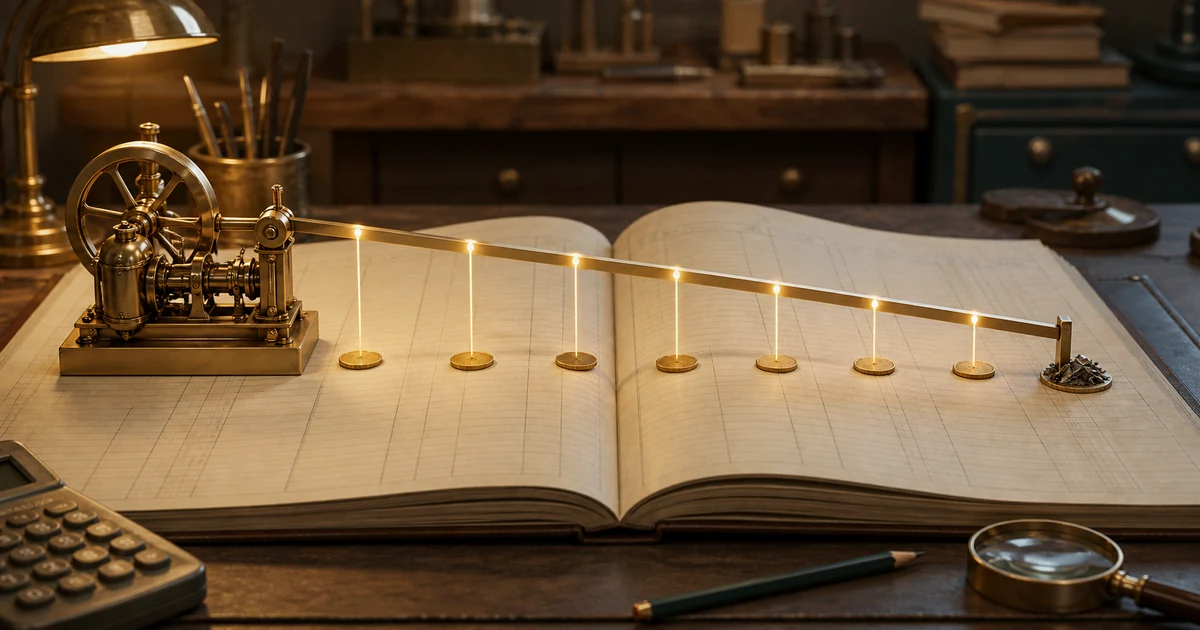
Straight line method of depreciation is one of the neatest methods in Accountancy.
The idea is simple: if an asset gives benefit evenly over its useful life, its cost should also be spread evenly over those years.
That is why this method feels like a straight line. The depreciation amount remains the same every year, unless there is a purchase, sale, or part-year adjustment.
Students usually understand the basic formula quickly. The confusion begins when the question adds scrap value, installation charges, a mid-year purchase, a sale of asset, or a ledger format.
This guide will help you solve those questions calmly, step by step.
Once you remember this one rule, most questions become easier to organise.
What Straight Line Method Means
Straight line method is a method of charging depreciation in which the same amount is written off every year over the useful life of the asset.
It is also called:
- fixed instalment method
- original cost method
The names tell you the logic.
“Fixed instalment” means the depreciation amount is fixed. “Original cost” means depreciation is based on the original cost of the asset, not on the reduced book value each year.
For example, suppose a machine costs Rs. 1,00,000 and depreciation is charged at 10 percent per annum on straight line method.
The yearly depreciation will be:
Rs. 1,00,000 x 10 / 100 = Rs. 10,000So Rs. 10,000 is charged every year, not just in the first year.
| Year | Depreciation | Closing book value |
|---|---|---|
| 1 | Rs. 10,000 | Rs. 90,000 |
| 2 | Rs. 10,000 | Rs. 80,000 |
| 3 | Rs. 10,000 | Rs. 70,000 |
| 4 | Rs. 10,000 | Rs. 60,000 |
The amount of depreciation stays constant. The book value reduces by the same amount each year.
Why This Method Is Called Straight Line
Imagine drawing the value of an asset on a graph.
At the beginning, the asset starts at its cost. Each year, the same amount is reduced. So the value falls evenly from year to year.
That pattern looks like a straight line going down gradually.
This is why the method is called straight line method.
This method is simple, predictable, and easy to check in exam questions.
Figures You Need Before Applying the Formula
Before you calculate depreciation, identify the information given in the question.
| Figure | Meaning | What to do with it |
|---|---|---|
| Cost of asset | Purchase price plus expenses needed to make the asset ready for use | Use as the base |
| Installation, freight, erection | Expenses needed before the asset can be used | Add to cost |
| Scrap value | Expected value at the end of useful life | Deduct before dividing |
| Useful life | Number of years the asset is expected to be used | Divide by this |
| Rate of depreciation | Percentage given in the question | Apply on original cost |
| Date of purchase or sale | Helps find months of use | Use time adjustment |
The biggest mistake students make is taking the purchase price as cost without reading the extra expenses.
If a machine is purchased for Rs. 80,000 and installation is Rs. 20,000, the cost for depreciation is Rs. 1,00,000.
This one habit can save many marks.
Formula of Straight Line Method
There are two common ways questions give straight line depreciation.
Sometimes the question gives cost, scrap value, and useful life.
Sometimes the question gives a depreciation rate.
Let us handle both.
Formula When Useful Life and Scrap Value Are Given
Use this formula:
Annual depreciation = (Cost of asset - Scrap value) / Useful lifeFor example:
| Particular | Amount |
|---|---|
| Cost of machine | Rs. 1,20,000 |
| Scrap value | Rs. 20,000 |
| Useful life | 5 years |
Annual depreciation = (1,20,000 - 20,000) / 5
Annual depreciation = 1,00,000 / 5
Annual depreciation = Rs. 20,000
So Rs. 20,000 will be charged every year.
Formula When Rate Is Given
Use this formula:
Annual depreciation = Original cost x Rate / 100For example, if machinery costs Rs. 75,000 and depreciation is 10 percent per annum:
Annual depreciation = 75,000 x 10 / 100
Annual depreciation = Rs. 7,500
This Rs. 7,500 is the depreciation for one full year.
If the asset is used for only part of the year, adjust it for the number of months.
Depreciation for part of year = Annual depreciation x Number of months / 12This is the main difference from written down value method.
How to Calculate Cost of the Asset
Cost of asset includes the amount spent to bring the asset into working condition.
So, for machinery, cost may include:
- purchase price
- freight or carriage inward
- loading and unloading
- installation
- erection charges
- trial run expenses, if given as necessary before use
It does not usually include ordinary repairs after the asset has started working.
For example:
| Particular | Amount |
|---|---|
| Purchase price of machine | Rs. 90,000 |
| Freight | Rs. 4,000 |
| Installation | Rs. 6,000 |
| Total cost for depreciation | Rs. 1,00,000 |
If depreciation is 10 percent per annum on straight line method:
Depreciation = 1,00,000 x 10 / 100
Depreciation = Rs. 10,000 per yearThis distinction matters because a wrong cost figure makes every year’s depreciation wrong.
Journal Entries Under Straight Line Method
The calculation method and the journal entry method are two different things.
Straight line method tells us how much depreciation to charge.
The journal entry tells us how to record it.
In simple questions, depreciation is often credited directly to the asset account.
Entry for Depreciation
Depreciation A/c Dr.
    To Asset A/c
This records depreciation as an expense and reduces the asset account.
Entry for Transfer to Profit and Loss Account
Profit and Loss A/c Dr.
    To Depreciation A/c
This closes the Depreciation Account at the end of the year.
For a normal straight line method ledger question, always read whether depreciation is credited directly to the asset or recorded through provision.
Machinery Account Format Under Straight Line Method
Here is the basic Machinery Account format when depreciation is credited directly to the Machinery Account.
| Machinery Account | |||
|---|---|---|---|
| Debit Side | Rs. | Credit Side | Rs. |
| To Balance b/d | Opening book value | By Depreciation A/c | Depreciation for the year |
| To Bank A/c | New purchase, if any | By Bank A/c | Sale proceeds, if sold |
| By Profit and Loss A/c | Loss on sale, if any | ||
| By Balance c/d | Closing book value |
If there is profit on sale, it appears on the debit side:
| Machinery Account | |||
|---|---|---|---|
| Debit Side | Rs. | Credit Side | Rs. |
| To Balance b/d | Opening book value | By Depreciation A/c | Depreciation till sale or year end |
| To Bank A/c | New purchase, if any | By Bank A/c | Sale proceeds |
| To Profit and Loss A/c | Profit on sale, if any | By Balance c/d | Closing book value |
Do not memorise the table blindly. Understand the balance.
The debit side shows asset cost or value coming in. The credit side shows depreciation, sale, and closing value going out of the account.
Depreciation Schedule Format
Sometimes a full ledger is not required. You may only need a depreciation schedule.
Use this format:
| Year | Opening book value | Addition | Depreciation | Closing book value |
|---|---|---|---|---|
| Year 1 | Rs. X | Rs. X | Rs. X | Rs. X |
| Year 2 | Rs. X | Rs. X | Rs. X | Rs. X |
For straight line method, depreciation is usually calculated on original cost. The opening book value column helps you track the carrying value, but it is not the base for calculating depreciation when the rate is on original cost.
This avoids the common mistake of mixing straight line method with reducing balance method.
Solved Example 1: Full-Year Depreciation With Scrap Value
A machine is purchased for Rs. 1,50,000. Its expected scrap value is Rs. 30,000 and useful life is 6 years. Calculate depreciation under straight line method.
Step 1: Write the formula
Annual depreciation = (Cost - Scrap value) / Useful lifeStep 2: Put the values
Annual depreciation = (1,50,000 - 30,000) / 6
Annual depreciation = 1,20,000 / 6
Annual depreciation = Rs. 20,000
Step 3: Prepare the schedule
| Year | Depreciation | Closing book value |
|---|---|---|
| 1 | Rs. 20,000 | Rs. 1,30,000 |
| 2 | Rs. 20,000 | Rs. 1,10,000 |
| 3 | Rs. 20,000 | Rs. 90,000 |
| 4 | Rs. 20,000 | Rs. 70,000 |
| 5 | Rs. 20,000 | Rs. 50,000 |
| 6 | Rs. 20,000 | Rs. 30,000 |
The closing book value at the end of the useful life is equal to the scrap value.
Solved Example 2: Rate Given on Original Cost
On 1 April 2026, a business purchased machinery for Rs. 80,000 and spent Rs. 20,000 on installation. Depreciation is charged at 10 percent per annum on straight line method. Accounts are closed on 31 March every year.
Calculate depreciation for the first two years.
Step 1: Find the cost
| Particular | Amount |
|---|---|
| Purchase price | Rs. 80,000 |
| Installation | Rs. 20,000 |
| Cost of machinery | Rs. 1,00,000 |
Step 2: Calculate yearly depreciation
Annual depreciation = 1,00,000 x 10 / 100
Annual depreciation = Rs. 10,000
Step 3: Apply it each year
| Year ended | Depreciation | Closing book value |
|---|---|---|
| 31 March 2027 | Rs. 10,000 | Rs. 90,000 |
| 31 March 2028 | Rs. 10,000 | Rs. 80,000 |
The depreciation amount remains Rs. 10,000 each year because it is calculated on original cost.
Solved Example 3: Part-Year Depreciation
On 1 October 2026, a business purchased furniture for Rs. 60,000. Depreciation is charged at 10 percent per annum on straight line method. Accounts are closed on 31 March every year.
Calculate depreciation for the year ended 31 March 2027.
Step 1: Find annual depreciation
Annual depreciation = 60,000 x 10 / 100
Annual depreciation = Rs. 6,000
Step 2: Count the months of use
The furniture was purchased on 1 October 2026 and accounts close on 31 March 2027.
Months of use:
| Month | Count |
|---|---|
| October | 1 |
| November | 1 |
| December | 1 |
| January | 1 |
| February | 1 |
| March | 1 |
| Total months | 6 |
Step 3: Calculate part-year depreciation
Depreciation = 6,000 x 6 / 12
Depreciation = Rs. 3,000
So depreciation for the year ended 31 March 2027 is Rs. 3,000.
This keeps part-year questions simple.
Solved Example 4: Sale of an Asset Under Straight Line Method
On 1 April 2024, a machine was purchased for Rs. 1,00,000. Depreciation is charged at 10 percent per annum on straight line method. On 30 September 2026, the machine was sold for Rs. 70,000. Accounts are closed on 31 March every year.
Find profit or loss on sale.
Step 1: Annual depreciation
Annual depreciation = 1,00,000 x 10 / 100
Annual depreciation = Rs. 10,000
Step 2: Depreciation already charged
| Period | Depreciation |
|---|---|
| 2024-25 | Rs. 10,000 |
| 2025-26 | Rs. 10,000 |
| 1 April 2026 to 30 September 2026 | Rs. 5,000 |
| Total depreciation till sale | Rs. 25,000 |
Step 3: Book value on sale date
Book value = Cost - Total depreciation
Book value = 1,00,000 - 25,000
Book value = Rs. 75,000
Step 4: Compare book value with sale proceeds
| Particular | Amount |
|---|---|
| Book value on sale date | Rs. 75,000 |
| Sale proceeds | Rs. 70,000 |
| Loss on sale | Rs. 5,000 |
The business has a loss of Rs. 5,000 on sale of the machine.
If you skip depreciation for the months before sale, the profit or loss figure will be wrong.
How to Present the Working Note
A neat working note is often the difference between a clear answer and a confusing one.
Use this structure:
Working Note:
Cost of asset = Purchase price + installation or other capital expenses
Annual depreciation = Cost x Rate / 100
Depreciation for part year = Annual depreciation x Months used / 12
Book value = Cost - Depreciation charged till date
Profit or loss on sale = Sale proceeds - Book value
If scrap value and useful life are given, replace the annual depreciation line with:
Annual depreciation = (Cost - Scrap value) / Useful lifeThis working note makes your method visible to the examiner.
Common Mistakes in Straight Line Method
Here are the mistakes that usually spoil otherwise correct answers.
| Mistake | Correct approach |
|---|---|
| Applying the rate on reduced book value every year | Apply it on original cost under straight line method |
| Forgetting installation or freight | Add necessary expenses to asset cost |
| Ignoring scrap value | Deduct scrap value when useful life formula is used |
| Charging full-year depreciation for a part-year asset | Use months of use divided by 12 |
| Forgetting depreciation up to sale date | Depreciate until the date of sale before finding profit or loss |
| Confusing depreciation with cash payment | Remember depreciation is an expense, not a yearly cash outflow |
| Leaving no working note | Show cost, rate, time, and book value clearly |
Slow reading is part of the solution.
Practice Questions
Try these questions after reading the solved examples.
Question 1
A machine is purchased for Rs. 90,000 and installation expenses are Rs. 10,000. Depreciation is charged at 10 percent per annum on straight line method. Calculate annual depreciation.
Question 2
Furniture costing Rs. 48,000 is purchased on 1 July 2026. Depreciation is charged at 15 percent per annum on straight line method. Accounts are closed on 31 March every year. Calculate depreciation for the year ended 31 March 2027.
Question 3
A machine costs Rs. 2,00,000. Its scrap value is Rs. 20,000 and useful life is 9 years. Calculate annual depreciation.
Question 4
On 1 April 2025, a machine was purchased for Rs. 1,20,000. Depreciation is charged at 10 percent per annum on straight line method. On 30 September 2027, it was sold for Rs. 86,000. Find profit or loss on sale.
Question 5
A business purchased equipment for Rs. 75,000 on 1 January 2027. Depreciation is charged at 12 percent per annum on straight line method. Accounts are closed on 31 March every year. Calculate depreciation for the year ended 31 March 2027.
Answers to Practice Questions
Answer 1
Cost of machine:
90,000 + 10,000 = Rs. 1,00,000Annual depreciation:
1,00,000 x 10 / 100 = Rs. 10,000Answer 2
Annual depreciation:
48,000 x 15 / 100 = Rs. 7,200Furniture was used from July to March, which is 9 months.
Depreciation = 7,200 x 9 / 12
Depreciation = Rs. 5,400
Answer 3
Annual depreciation = (2,00,000 - 20,000) / 9
Annual depreciation = 1,80,000 / 9
Annual depreciation = Rs. 20,000
Answer 4
Annual depreciation:
1,20,000 x 10 / 100 = Rs. 12,000Depreciation till sale:
| Period | Depreciation |
|---|---|
| 2025-26 | Rs. 12,000 |
| 2026-27 | Rs. 12,000 |
| 1 April 2027 to 30 September 2027 | Rs. 6,000 |
| Total | Rs. 30,000 |
Book value on sale date:
1,20,000 - 30,000 = Rs. 90,000Sale proceeds are Rs. 86,000.
Loss = 90,000 - 86,000
Loss = Rs. 4,000
Answer 5
Annual depreciation:
75,000 x 12 / 100 = Rs. 9,000Equipment was used from January to March, which is 3 months.
Depreciation = 9,000 x 3 / 12
Depreciation = Rs. 2,250
Frequently Asked Questions
What is the straight line method of depreciation?
Straight line method is a method in which the same amount of depreciation is charged every year over the useful life of an asset.
Why is it called fixed instalment method?
It is called fixed instalment method because the depreciation amount normally remains fixed each year.
What is the formula for straight line method?
If useful life and scrap value are given, use (Cost of asset - Scrap value) / Useful life. If a rate is given, use Original cost x Rate / 100.
Is depreciation calculated on book value in straight line method?
No. Under straight line method, depreciation is calculated on original cost. Depreciation on reduced book value belongs to written down value method.
Should installation charges be included in cost?
Yes, if installation is necessary to make the asset ready for use, it should be added to the cost of the asset.
What happens if an asset is bought in the middle of the year?
First calculate depreciation for one full year. Then charge depreciation only for the months the asset was used during that accounting year.
How do I calculate profit or loss when an asset is sold?
Charge depreciation up to the date of sale, find the book value on the sale date, and compare it with the sale proceeds. If sale proceeds are higher, there is profit. If sale proceeds are lower, there is loss.
What is the most common mistake in straight line method questions?
The most common mistake is applying the depreciation rate on reduced book value. In straight line method, the rate is applied on original cost unless the question gives a different instruction.
Looking for commerce tuitions?
Prachi is a gold-medalist commerce teacher with experience at Deloitte and KPMG. She focuses on fundamentals to build a strong foundation.